

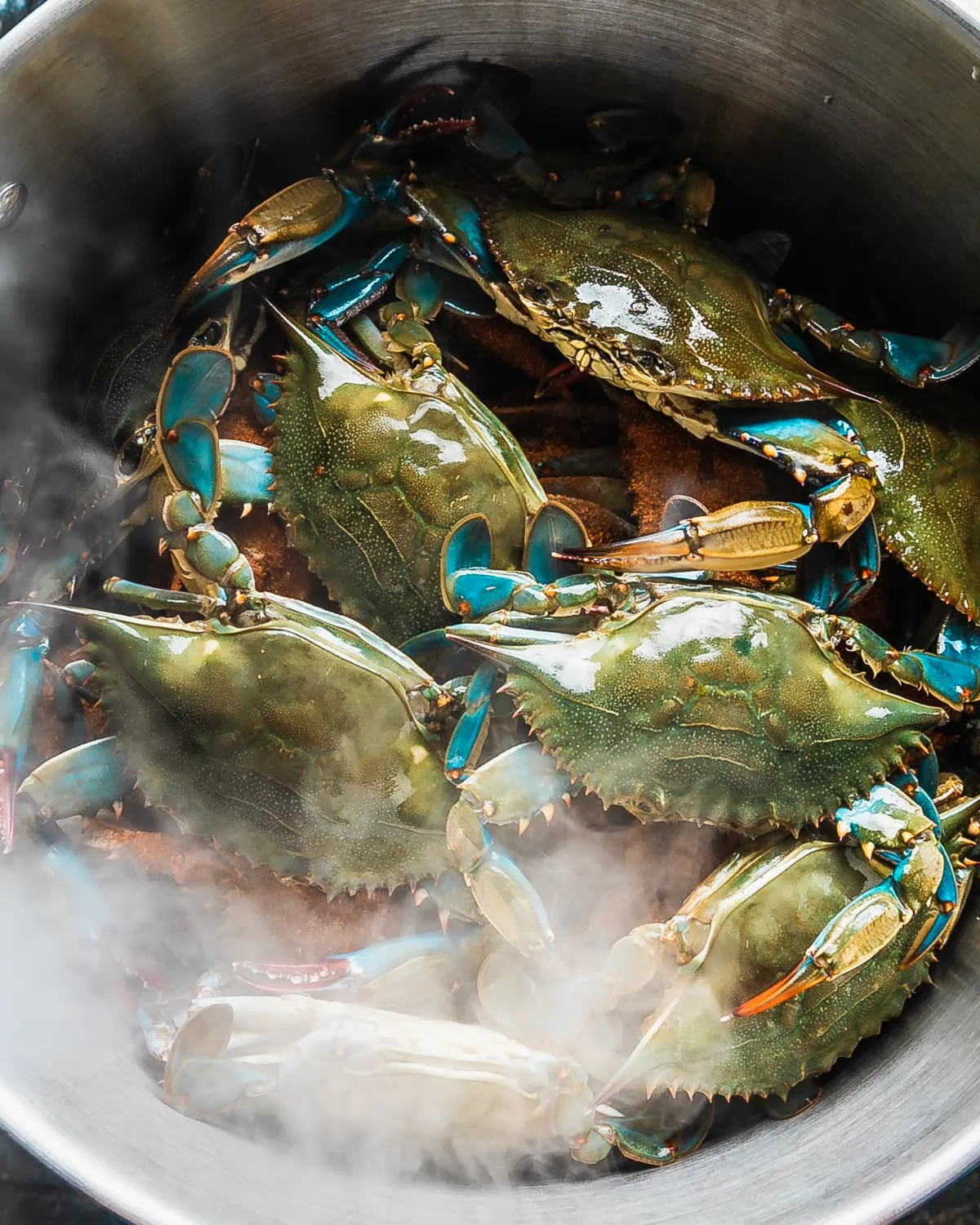
Buying and eating blue crabs can intimidate anyone who's never done it, but I'm going to make it easy for you! I'm taking you from market to the table today with this post.
This is a step-by-step guide to buying the best fresh crabs and taking them home, and showing you the right way to eat blue crabs: cracking them open, and savoring every bit of sweet, tender meat. Blue crabs have always been a favorite in my house and now we're going to make them a favorite at yours!

This post may contain Affiliate Links. Please see my Full Disclosure Policy for more details.
Jump to:
The Chesapeake 'Bae', Blue Crabs!
My mama was born in Maryland, and I've spent half of my life here in the Chesapeake Bay area. Though my life and family runs throughout the entirety of the South, you'll find that these little crustaceans are a part of any coastal Southerner's summers.
Blue crab meat is sweet and delicious and a favorite all over the country, You may be used to buying some jumbo lump crab meat for your crab cakes, but honey we get down with those feisty live crabs all over the South. Especially here, where we have crab festivals and contests all summer long. And with Memorial Day literally right around the corner, I know summer and crab boils are on y'all's (our) mind!

You're probably here from my steamed blue crabs recipe (if not, you should use that recipe after buying your crabs!) so be prepared: you're about to be covered in melted butter and old bay seasoning!
How to Buy Maryland Blue Crabs Like a Pro
Tools You'll Need
- A Cooler - you want a cooler with you when you go buy the live crabs from the market because those plastic bags they have aren't strong enough.
- Ice - go to the store or to a Sonic restaurant and buy a couple of cheap bags of ice. Your ice maker won't make enough. You'll want enough to make a good layer across the bottom of your cooler, but not enough that they'll submerge the crabs and drown them as the ice melts.
- Tongs - stay safe and don't get pinched with a long pair of tongs!
Where to Find the Best Crabs
Fresh blue crabs are easiest to find at coastal seafood markets and docks, where the catch is often local and fresh off the boat. If you’re not near the water, check reputable seafood shops or grocery stores with a good seafood counter.
For inland options, online seafood retailers can deliver live or freshly steamed crabs straight to your door—just be sure to read reviews and check their shipping policies!

When picking blue crabs, liveliness is key here—they should be moving, bubbling at the mouth, mad at the world. Avoid sluggish or inactive ones, they’re most likely half gone, honey. Don’t be shy about asking the seller questions—they’re usually happy to help you out!
What Size Crab Should You Buy?
When you arrive at the seafood market, you'll be bombarded with all types of words you may have no idea how to decipher. So let's get into the lexicon of buying live blue crabs:
| Crab Type | Size and Meaning |
|---|---|
| Extra Large Male Crabs | These Jumbo or Heavyweight crabs are around 6 ½ to 7 inches across, they're the best crabs for eating but more expensive than the others. |
| Male #1 (Jimmies) | These are the more common large male crabs, they're 5 inches to 6 ¼ inches across the shell. They're full of meat and much more affordable than the extra large males, so they're most desired. |
| Male #2 | These are medium crabs (and cheaper than #1 Jimmies) they're typically caught right after molting and have not quite filled out their new bigger shell. They range from 5 – 5 ½ inches and are not as meaty. |
| Females | Also known as “sooks”, female blue crabs can grow up to 6 inches. The taste and texture of the meat is sweeter and dense, and they are harder to find since the pregnant ones are thrown back, if your state even allows them to be fished at all. |
How Many Crabs Should I Buy?
This is for general hard shell live blue crabs, not for soft-shell crabs that are also available during the summer! The amount in a bushel can vary because of the different size of the crabs.
The price does depend on if you're in the region or not and if you need shipping, but this is my findings at the local markets in the Chesapeake region from Maryland and up and down Virginia.
| The Term | The Definition | How Many Servings | Pricing (varies) |
|---|---|---|---|
| A Bushel of Crabs | A bushel equates to 5.5 dozen (large crabs) to 7 dozen (smaller crabs), or about 66 to 84 live crabs. | 8-10 people | $250 to $350 |
| A Half Bushel of Crabs | A half bushel is about 3-5 dozen crabs, or 36-42 crabs | 5-6 people | $150-$190 |
| A Quarter Bushel of Crabs | A quarter bushel is about 21-24 crabs. | 3-4 people | $60-$100 |
| A Dozen Crabs | This is the smallest amount of live blue crabs you can buy, and the 'bushel' amounts are counted by dozens. | 2 people | $28-$50 |
Quick Buying Tips
- Blue crabs' availability runs from April to November, with soft-shell season in the early summer.
- Fresh blue crabs should smell clean, like the ocean. If there’s a strong, fishy odor, pass on them.
- They need to be very lively! Once a crab dies it can't be eaten, so don't end up paying for them!
- A firm, hard shell typically means the crab is full of meat, while soft shells might be a sign of molting and less meat inside.
- How to Transport Live Crabs Home: Keep them on a thin layer of ice with the cooler cracked open so they can get some air (as long as the cooler isn't packed with crabs up to the top, they can't climb out) and cover them with seaweed or wet straw (ask for some from the crabbers) or wet paper towels so they remain wet but won't down in the melted ice water.
How to Properly Eat Blue Crabs
Picking crabs isn't a hard thing once you know what to do! These are simple steps to help you get all the good crab meat for your troubles. You'll look like you've been spending every summer of your life in the Baltimore harbor.
First, look at the aprons to know how to get into the crab.

Male crabs have thin, narrow aprons.

The female aprons are wide and a little domed.

Step 1 | First things first, remove the claws and crab legs. The back legs don't have much meat in them, but you do want to get at the claws and arm knuckles. I'll show you how to open the claws later on.

Step 2a | Next, remove the apron. Remember, the females have the wide apron, seen here. Remove the gonads that are under/attached to the apron.

Step 2b | Have a male instead? Lift and tear off their apron too. Instead of frilly gonads underneath, they have those things. They kinda look like the little popping fireworks kids throw on the ground. Discard them, too. We don't eat them.

Step 3 | The apron removal left a hole at the back of the shell, use that to help pull the top of the shell off the body of the crab. When you remove the top shell, the eyes, stomach, and mouth bits come off with it.

Surprise! | This is the top shell of a female crab with a prize: bright orange crab roe. Many female crabs carry roe in big sponges on the apron in the summer and have to be thrown back for conservation and sustainability efforts. Since that roe is rare, and females aren't legal to grab in most coastal states, it's a delicacy for crab lovers (and a must for authentic She Crab Soup!).

Step 4 | When you pull the top shell off you'll see the frilly gills (aka the Dead Man's Fingers) right on top of the body full of meat. Remove the gills, they are inedible.

Step 5 | So now we have the gills removed and are left with the actual body full of lump meat. Turn the crab over and break it in half along that big divide in the center of the body to release some of that sweet crabmeat!

Step 6 | Much like a snow crab cluster, the chunks of meat are hiding in pockets between the cartilage. So give it a little *crunch* using your fingers and twist to break open the cartilage, then go to town!

Step 7 | Now get after those claws! Use a mallet, or if you're not a delicate person and will smash it, use a pair of crab crackers to gently crack the claws and knuckles open.

Step 8 | Pull the claw meat right out from the cartilage it's attached to on the thumb and enjoy it! It does have a stronger crab flavor than the delicate body meat.
Tools You'll Need for Eating
- Crab mallets and Crab Claw Crackers- these wooden mallets and tong-like tools are great for cracking the claw shells open.
- Plenty of Paper Towels - you're going to need them, a lot of them.
- Newspaper or Brown Paper Bags - I like using brown paper like the restaurants! It's stronger, sturdier, less likely for crab juice to leak through and isn't covered in ink. You could also use butcher paper or parchment paper.
Dishes I love to Serve at my Crab Feasts


Tips for Eating Blue Crabs
- Large crabs are great for cracking and eating straight, while smaller ones work well in soup, gumbo, or seafood boils.
- Don’t throw away the shells! You can use them to make a simple crab stock. Just simmer them with aromatics like onions, garlic, and herbs to extract all that lingering flavor for seafood soups or sauces.
- The underside of the crab, where the apron is, is often where you’ll find the sweetest, tender meat. It’s worth a few extra seconds to scoop this part out carefully before moving on to the rest.

FAQs
Depending on what size crab you buy, you're expecting each adult to eat 3-6 crabs. Young kids will probably eat 2-3, at most.
The gills, the stomach (behind the eyes), the shell, and any uncooked roe are inedible parts of the crab.
You could be talking about that yellow stuff in the crab called 'the mustard, the 'crab fat', or 'crab butter ', aka the tomalley/the crab's organs. It is edible and it adds extra flavor to the crab meat, for those who like it.
You could also find a female with orange roe in her shell if you live in a state that allows females to be crabbed, which is also edible.
Depending on what state you're in or buying blue crabs in, you may only be able to get male crabs.
In the spring and summer, the crabs begin molting and that's the only time they can procreate. Many lady crabs will have an apron full of eggs, so crab population sustainability laws force crabbers to throw them back, if the state allows females to be crabbed.




Leave a Reply