

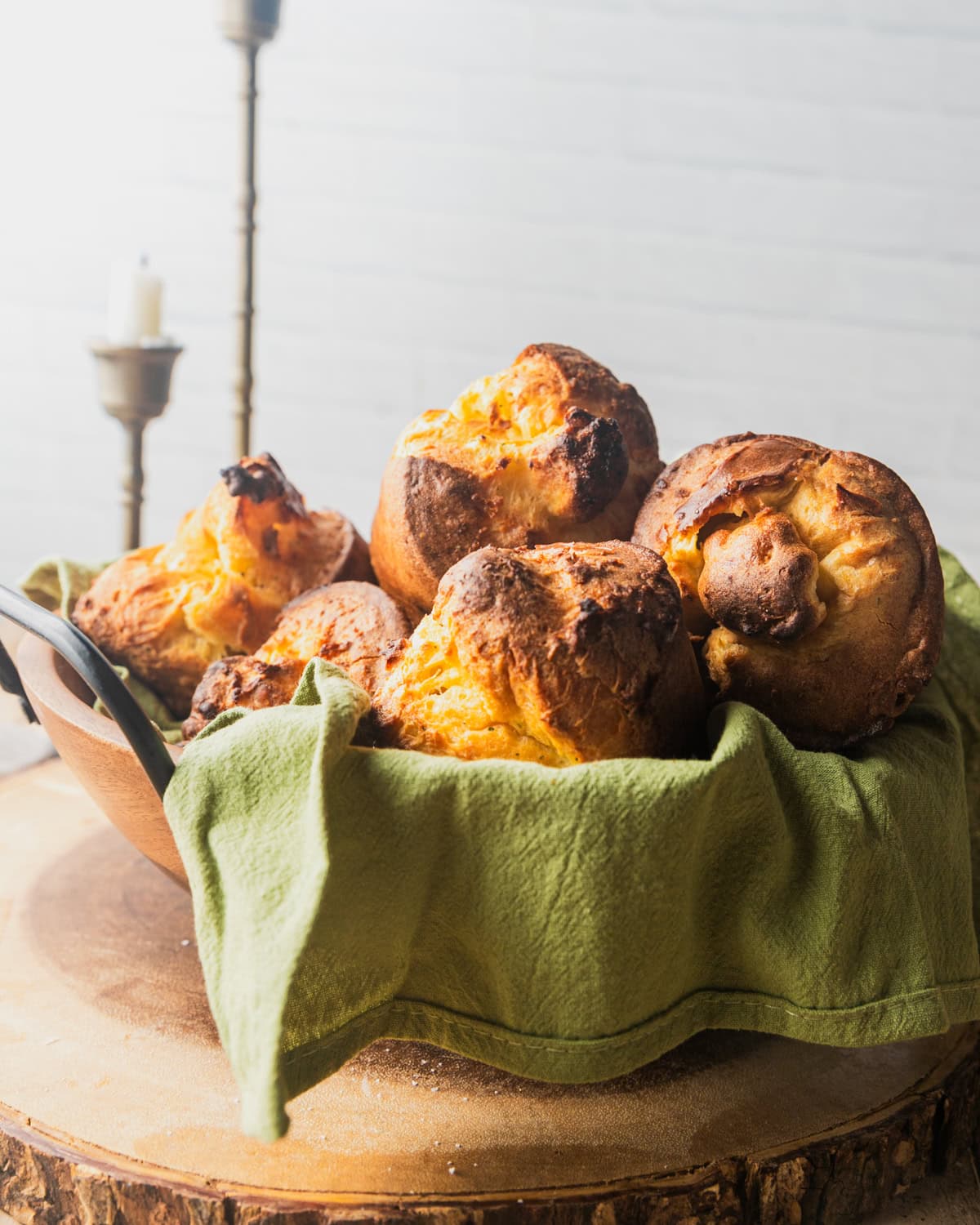
If your idea of making bread has nothing to do with kneading or babysitting dough, these savory brown butter sage and parmesan popovers are it. They taste like Thanksgiving, hence our nickname for them: Stuffing Popovers!
These are the easiest holiday dinner rolls ever; they come together right in the blender with no yeast, no proofing, no rising. Just blend, wait, bake...which is why my husband insists on making them every year!
They give a little Yorkshire pudding energy with the beef tallow, but are exactly what you want from a steam-puffed popover recipe with the crispy crust. We serve them at Thanksgiving and with cozy fall dinners, absolutely drowning in gravy, and they’re just as perfect for a Sunday roast or holiday brunch.
Jump to:

Why you'll love these Crispy Brown Butter Sage Parm Popovers
- They rise tall and dramatic. A screaming-hot pan and room-temperature batter give that gorgeous steam puffed lift instead of squat, muffin looking rolls.
- Light inside, crisp outside. We bake long enough to set the centers so they stay airy and don’t immediately sink into sad little shells.
- No kneading, no proofing, no fuss. These feel fancy enough for holiday dinners but come together in a blender with zero yeast or rise time.
- Easy to switch up. Swap the herbs, add garlic, pile on extra cheese, you can even use a whisk and some elbow grease instead of a blender, they're so forgiving.
Ingredients Needed
Full ingredients, measurements, and printable instructions are in the recipe card at the bottom of this post.

- Butter + Fresh Sage - Browning blooms the sage, deepens the butter flavor, and gives the batter rich, savory depth.
- Parmesan Cheese - Use freshly grated Parmesan, not pre-shredded, so it melts into those lacy, crispy edges instead of disappearing into the batter.
- All-Purpose Flour
- Whole Milk - Whole milk gives the batter enough protein to set into a firm shell, and its sugars caramelize at high heat. Low-fat or almond/oat milks won’t brown the same.
- Eggs - They help the batter puff dramatically and set into that crisp outer shell while keeping the center custardy instead of bready and dry.
- Kosher Salt and Black Pepper
- Beef Tallow - helps with browning, lift, and flavor. Butter burns at high temps and cooking spray can get sticky while heating up. Beef tallow has a higher smoke point, creates a better crust, and adds savoriness.
How to Make Perfect Popovers Every Time
Step 1

Brown the sage + butter.
This blooms the herbs and gives a deeper, savory flavor that doesn’t get muted in the bake.
Step 2

Whip up the milk + eggs.
Add room-temperature eggs and milk to the blender and blend on low until smooth and frothy, about 10–15 seconds.
Step 3

Whip in the flour + butter.
Blend in the flour, salt, and pepper just until smooth, then slowly stream in the brown butter with the blender on low.
Stir in the Parmesan by hand, then let the batter rest while the pan heats with the beef tallow in the oven.
Step 4

Grease the hot pan with tallow, fill the pan, + bake.
Carefully pull the hot pan from the oven, brush each cup with beef tallow all the way up the sides, then fill each well about ¾ full and get it right back in the oven—450°F for 20 minutes, then 350°F for 10-15 minutes until tall and golden.It all happens fast: hot pan out, pour, back in!
Step 4

Vent and serve immediately.
Poke a small hole in each popover to release steam so they stay lofty instead of collapsing, then serve while the shells are crisp and the centers are warm and custardy. Serve them with gravy, honey, jam, or butter!
Equipment I Used


Chef's Tips
- Warm ingredients = tall rise. Cold eggs or milk slow down steam formation, which means squat popovers with dense centers. Using room-temperature batter lets it heat quickly and expand before the crust sets, giving you those oh-so-dramatic mile high shells.
- Blend in stages to protect texture. Blending the eggs and milk first incorporates air and gives you that silky base, but adding the flour separately prevents over-developing gluten. It keeps the centers soft instead of bread-like or tough.
- Heat conduction matters so use dark metal if possible. Popovers rise from direct heat hitting the batter quickly. I use dark metal pans because they conduct and retain heat better than pale aluminum or ceramic, so you’ll get taller rise and deeper caramelization in the crust.

Troubleshooting
They needed more time for the interior to set. Extend the bake time after lowering the heat, or let them rest in the turned-off oven for 5 minutes to dry out the centers. Cold batter can also lead to undercooked centers.
Try not to. Opening the oven releases steam before the structure sets and can deflate them. I don’t open the oven until the last 10 minutes of baking, if at all.
Yes, but let it come to room temperature before baking so the batter heats quickly and rises properly. Straight-from-the-fridge batter won’t puff as high.
Yes, but they won’t get as tall because muffin tins are wider and shallow. Fill them halfway up instead of ¾ full, start at 425°F instead of 450°F, and expect a slightly rounder shape.
They puff from trapped steam, and if that steam has nowhere to escape, the shells soften and fall. I poke a small hole in each popover as soon as they come out so they vent cleanly and stay tall.
How do Popovers Even Work?
Popovers are steam-leavened bread, rising from steam instead of yeast or baking powder. I make the batter thin and egg-heavy on purpose so when it hits a ripping-hot, greased pan, the liquid turns to steam and pushes the batter up the sides, creating that tall, hollow center.
The outside sets quickly thanks to the hot pan and high heat, trapping steam inside. Once they’ve ballooned up, I lower the temperature so the shells can dry out and stay crisp instead of collapsing as soon as they cool.

These popovers are always a hit at my Thanksgiving table, they’re cozy, a little indulgent, and way easier than they look...my favorite kind of recipe! If they earn a spot in your holiday spread, tag me @sweet_tea_thyme! I’d love to celebrate your traditions right along with you.

Brown Butter Sage Parmesan Popovers
Ingredients
- 3 tablespoon salted butter
- 5 sage leaves
- 2 tablespoon beef tallow, for greasing pan wells
- 4 large eggs, room temperature
- 1½ cups whole milk, room temperature
- 1½ cups all purpose flour
- 1½ teaspoon kosher salt
- ½ teaspoon black pepper, freshly ground
- ½ cup parmesan cheese, finely grated
Instructions
- Melt butter in a small saucepan, add the sage, and cook until the butter smells nutty and the solids at the bottom turn golden brown, no more than 5 minutes. Set aside to cool slightly.3 tablespoon salted butter, 5 sage leaves
- Place the beef tallow in your popover pan well, then put the pan on the middle rack of your oven and preheat to 450°F so the metal and fat are scorching hot when the batter goes in.2 tablespoon beef tallow
- Add the room-temperature eggs and milk to a blender and blend on low until frothy, about 10–15 seconds.4 large eggs, 1½ cups whole milk
- Blend in the flour, salt, and pepper just until smooth. With the blender on low, slowly stream in the browned butter with sage, then stop blending and stir in the parmesan cheese by hand with a spatula so it doesn't end up becoming one with the batter. Let the batter rest for 15 minutes while the pan heats up.1½ cups all purpose flour, 1½ teaspoon kosher salt, ½ teaspoon black pepper, ½ cup parmesan cheese
- Carefully pull the hot pan from the oven, fill each well about ¾ full of batter, and bake at 450°F for 20 minutes, then 350°F for 10-15 minutes until tall, deeply golden, and crisp. DO NOT OPEN THE OVEN WHILE THEY BAKE.
- Poke a small hole in the side of each popover to let steam escape so they stay tall with crisp shells. Serve right away while warm with gravy, jam, honey, or butter.




Leave a Reply